



At Paris School of Business, the Café Philo offers students a space for reflection and dialogue to question the world around them, develop critical thinking, and challenge their ideas.
Rediscovering philosophy in a new way
Fostering curious minds capable of questioning the world
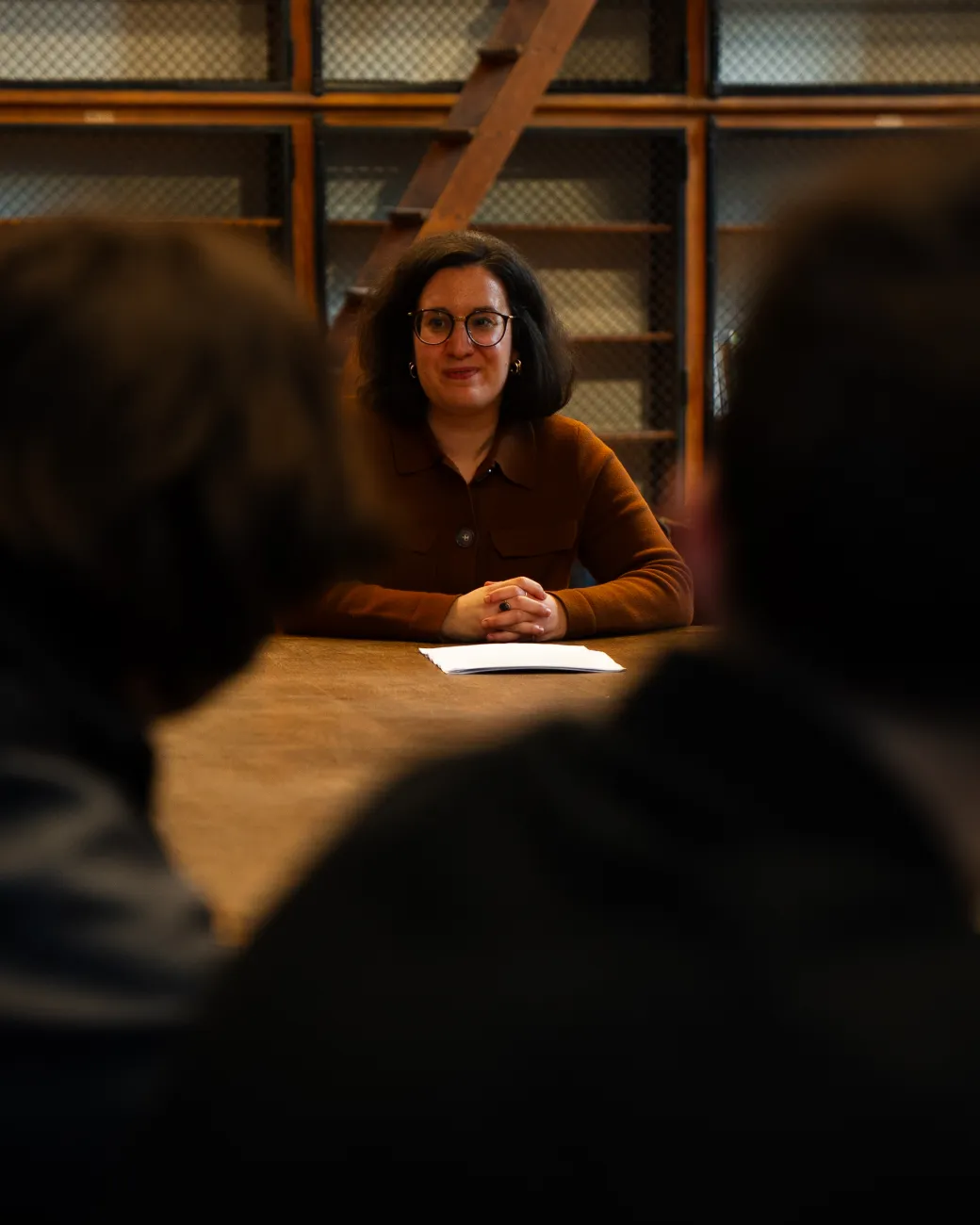
The initiative is led by Ioanna Pachyla, librarian at the Paris School of Business library. She holds two research master’s degrees: one in philosophy, history, and contemporary philosophy from Université Paris Nanterre, and another in logic and philosophy of science from Université Paris 1 Panthéon-Sorbonne. She also taught philosophy for three years within the French national education system.
This experience convinced her of one thing: philosophy finds its true meaning when it becomes a living practice of reflection and dialogue.
It is in this spirit that the Paris School of Business Café Philo was created—to allow students to rediscover philosophy not as an academic exercise reserved for essays, but as a tool to understand the world and question one’s assumptions.
A free and friendly discussion space
A participatory format that breaks away from traditional teaching
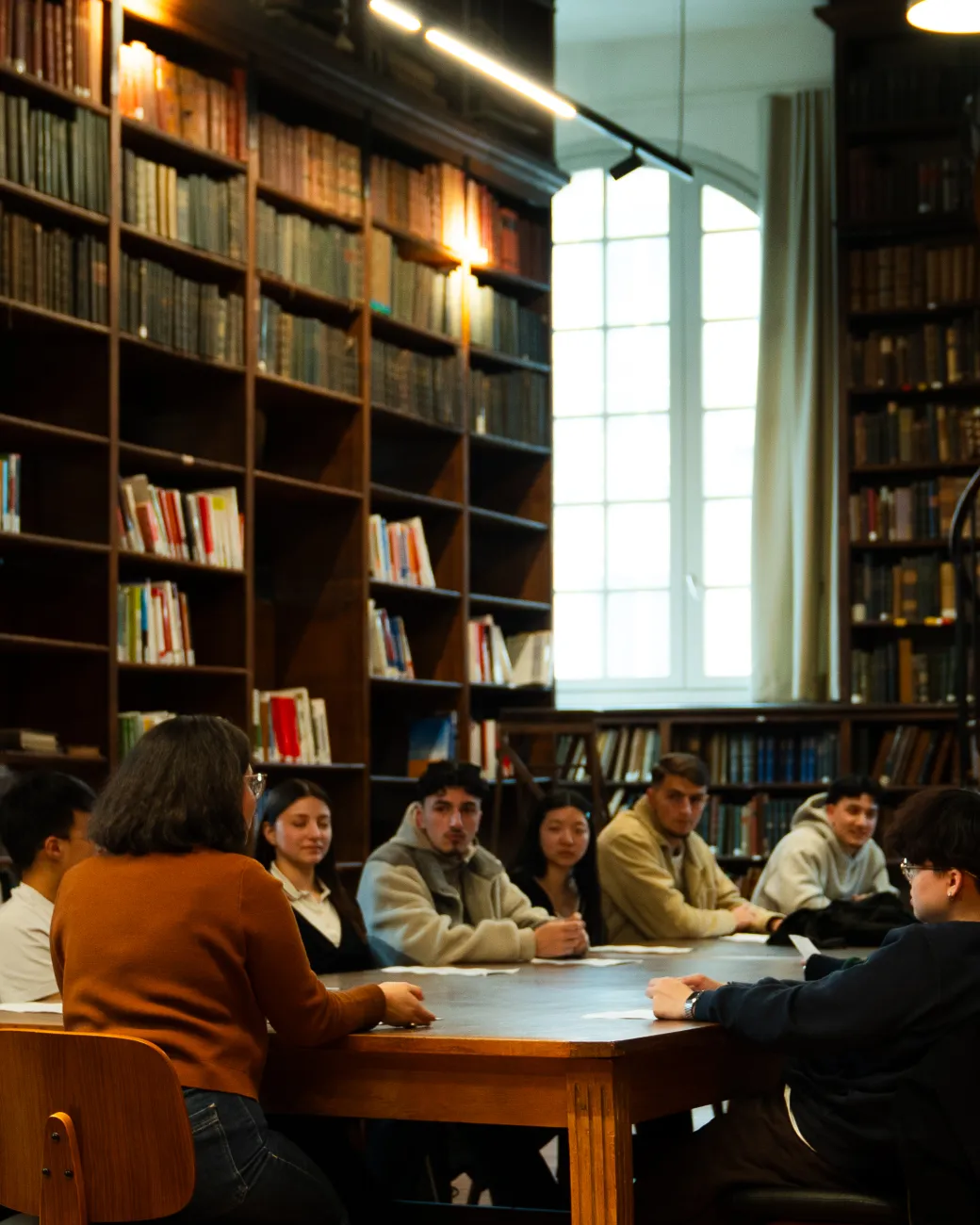
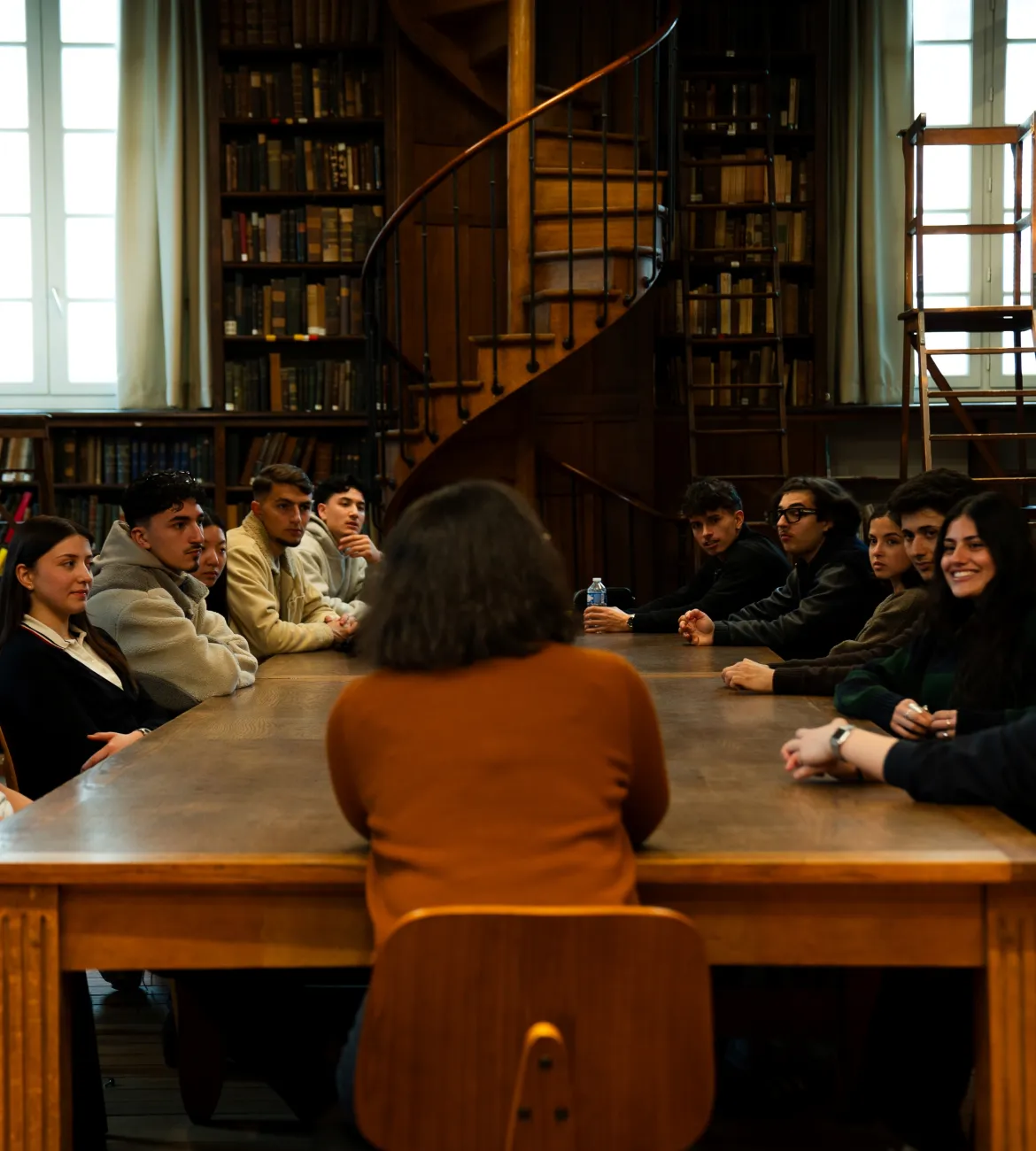
Unlike a lecture or a traditional class, the Café Philo is based on a deliberately simple and participatory format. Students gather around a table to exchange ideas based on a philosophical question, often introduced by a short text.
No prior knowledge is required, and there is no assessment attached to these sessions. The goal lies elsewhere: encouraging students to speak up, confront ideas, and build collective reasoning.
Inspired by the spirit of the ancient Greek agora, this format places all participants on equal footing. Everyone can express a point of view, question it, or refine it in a respectful environment.
Philosophy and management: a natural complement
Reflecting on the values that shape business and economics
While the initiative may seem surprising in a business school, it fully aligns with the training of future managers.
Philosophy allows students to question the values and principles underlying economic and managerial practices. As the project lead points out, the earliest reflections on economics have their roots in ancient philosophy, notably in the works of Xenophon and Aristotle.
In a world marked by rapid information flow and technological transformation, learning how to structure one’s thinking, argue effectively, and challenge assumptions has become an essential skill.
These discussions also enable students to explore contemporary ethical, social, and professional issues while developing their analytical and judgment skills.
Reflection rooted in contemporary issues
Debates that resonate with student concerns and global change
This year, the sessions revolve around a central theme: humanity. Among the questions explored: “Is humanity a utopia?”
Such open-ended questions allow students to engage with highly relevant issues—whether related to societal transformations, business challenges, or personal concerns.
Philosophy thus becomes a true intellectual exercise, training students to compare ideas, analyze arguments, and build independent judgment—key skills for future managers at Paris School of Business.
A project designed to last
Toward new formats and ever more open exchanges
Since its launch, student feedback has been very positive. Many highlight the opportunity to go beyond surface-level thinking and deepen their reflection, even when the texts discussed may initially seem complex.
Discussions evolve from session to session, enriched by the diversity of students and their experiences. The objective remains constant: to maintain a space where freedom of expression meets intellectual rigor.
In response to this enthusiasm, Paris School of Business aims to establish the Café Philo as a long-term initiative and explore new formats. In the future, external speakers may be invited to enrich discussions in a bilingual French-English setting.
A way for the School to reaffirm that educating managers is not only about transmitting technical skills, but also about shaping minds capable of thinking, questioning, and acting with discernment.